How Much Time Does It Take for Beef Cattle to Reach Market Weight
Beef Cattle Production and Lifecycle
The journey of beefiness cattle from birth to plate can be complex. This is due to the changing needs of the animal equally it progresses through its lifecycle. Because of these irresolute needs and depending on where the animal is in its lifecycle, it will exist moved to farms that specialize in the different stages of the production system. The farmers and ranchers that make up the cattle industry consist of a community of farms working consistently to provide humane, safe and environmentally sustainable intendance throughout the cattle'south lifecycle. The result is a safe, succulent and nutritious food the whole family can enjoy.
Beefiness Cattle Production Organization
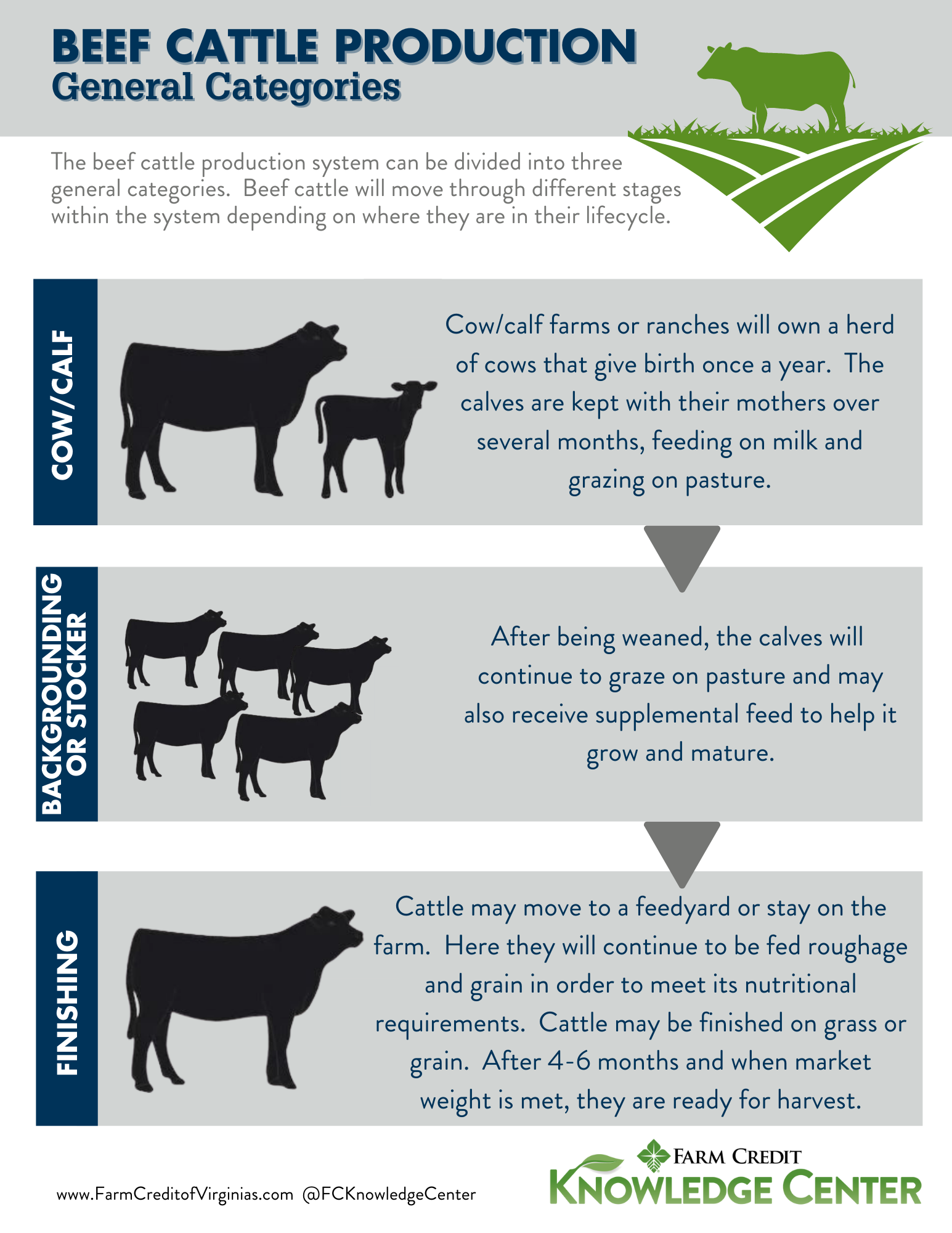
The beef cattle production system can be divided into iii general categories. Beef cattle will movement through different stages within the system depending on where they are in their lifecycle.
Beef cattle product tin can be divided into three full general categories:
- The cow-dogie segment which produces feeder calves for further feeding/grazing.
- The backgrounding or stocker phase of production adds body weight to recently weaned calves, resulting in yearlings that are feedlot ready.
- The finishing phase of production is where cattle are fed until they reach market weight.
The Beef Cattle Lifecycle
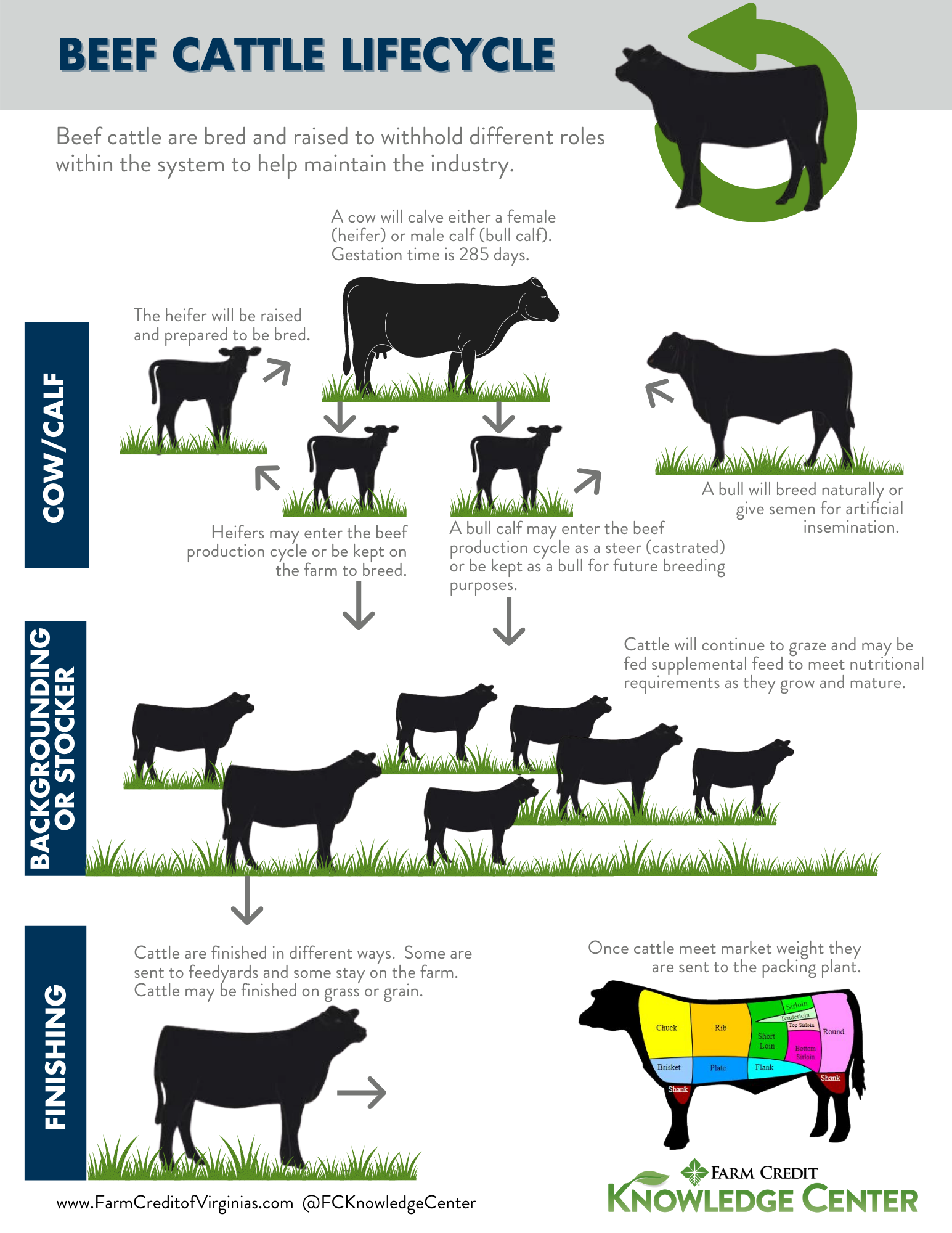
The beef cattle production system tin be grouped into iii categories. However, the lifecycle of beef cattle is a bit more expansive. Non all cattle are raised through the stages with the cease goal of being market fix. Beef cattle are bred and raised to withhold different roles within the system to help maintain the industry.
Cow/Dogie Phase
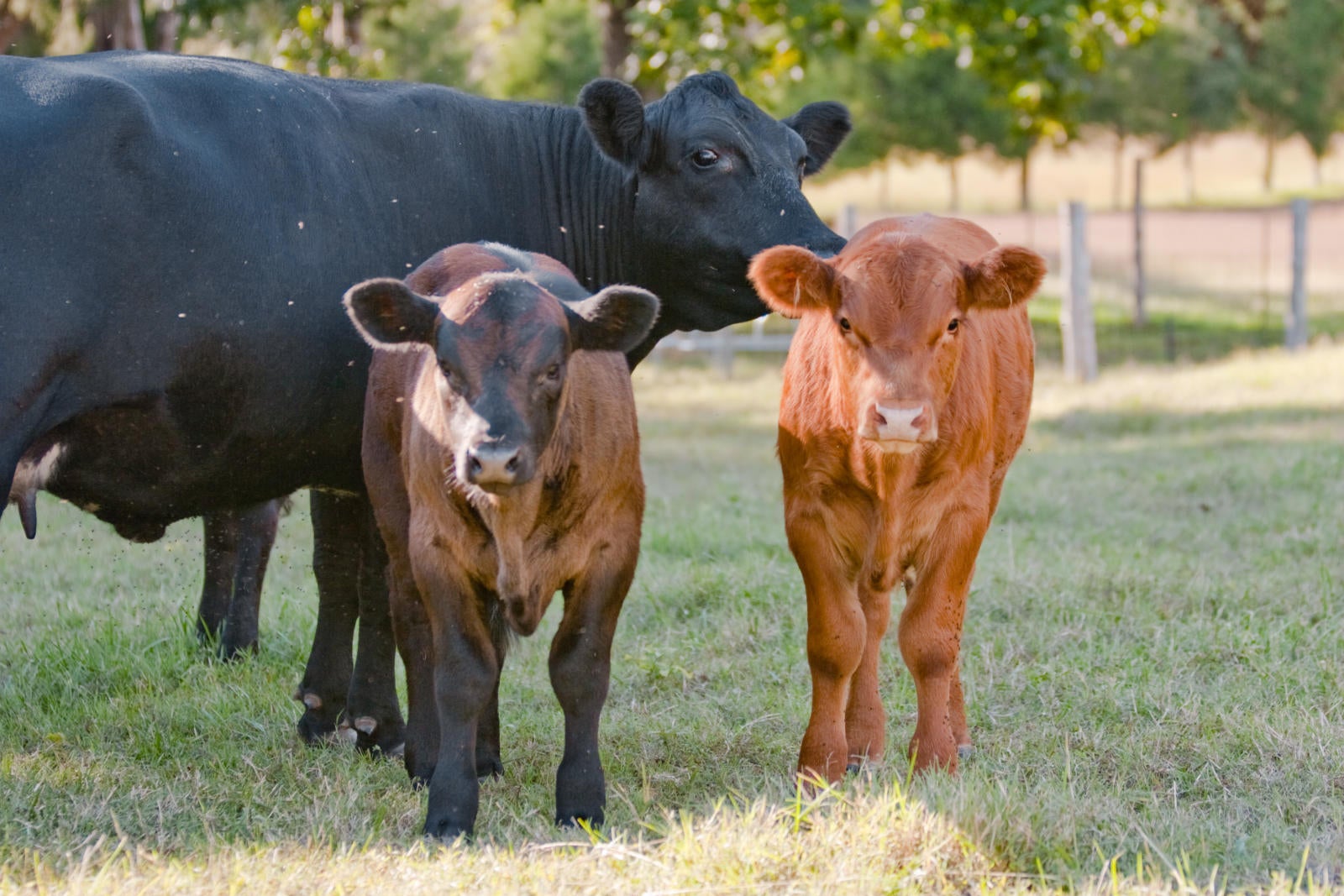
It begins when a cow calves either a heifer (female person) or balderdash calf (male) after 285 days of gestation. Note-A cow can give birth to twins. When ane is a balderdash calf and the other is a heifer calf, the female is more than likely infertile. The infertile female is called a freemartin.
Calves are weaned from their mother's milk effectually the age of vi to 9 months of historic period and when they weigh between 500 and 700 pounds. During the weaning period they proceed to graze on pasture.
Heifers may enter the beef production bike or be kept on the farm as part of the breeding organization. In this case the heifer is raised and prepared to be bred the following year.
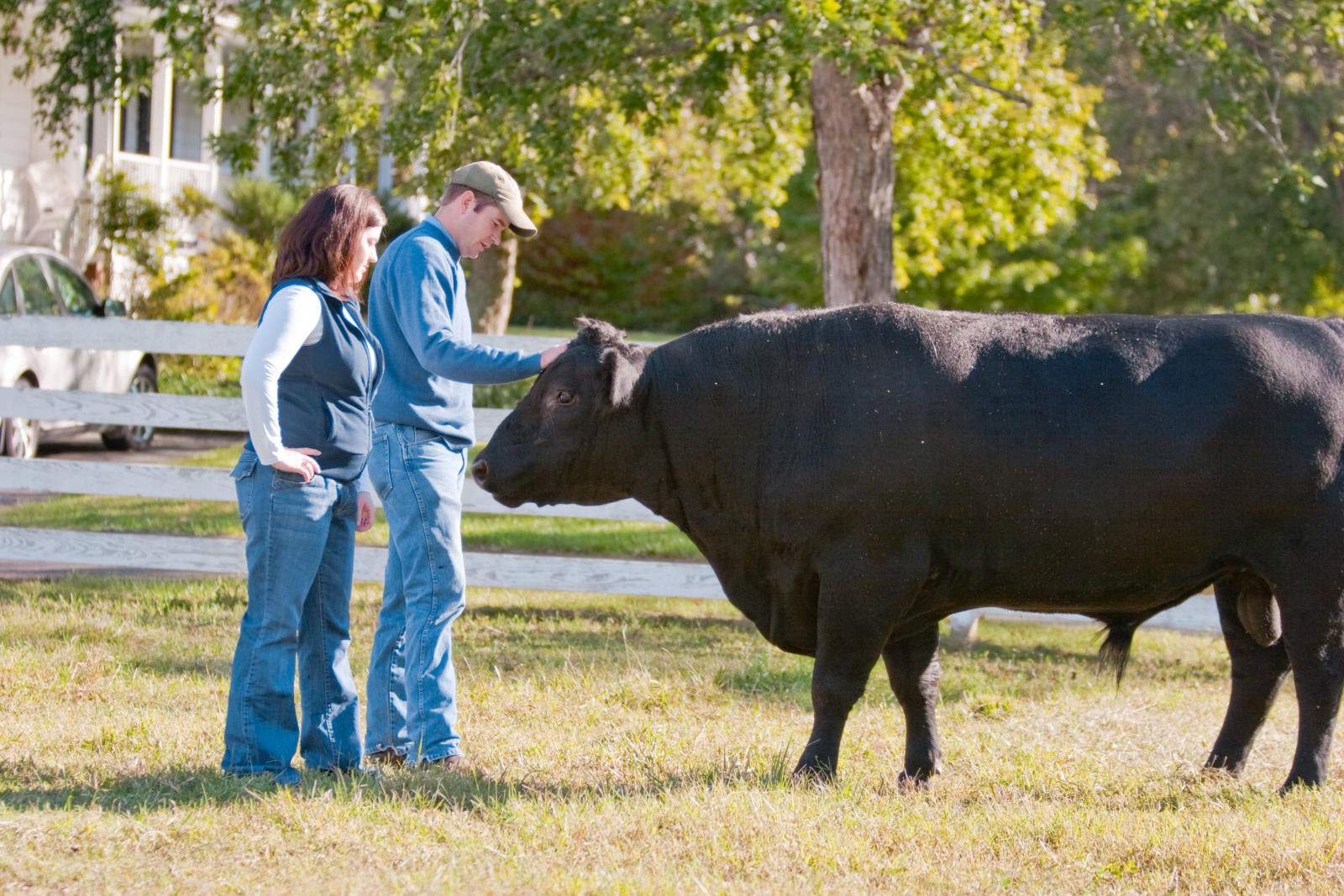
Bull calves may enter the beef production cycle equally a steer or be kept as a bull for future breeding purposes. The balderdash calf is raised and when of age, the bull will breed naturally or give semen for artificial insemination.
Backgrounding or Stocker Phase
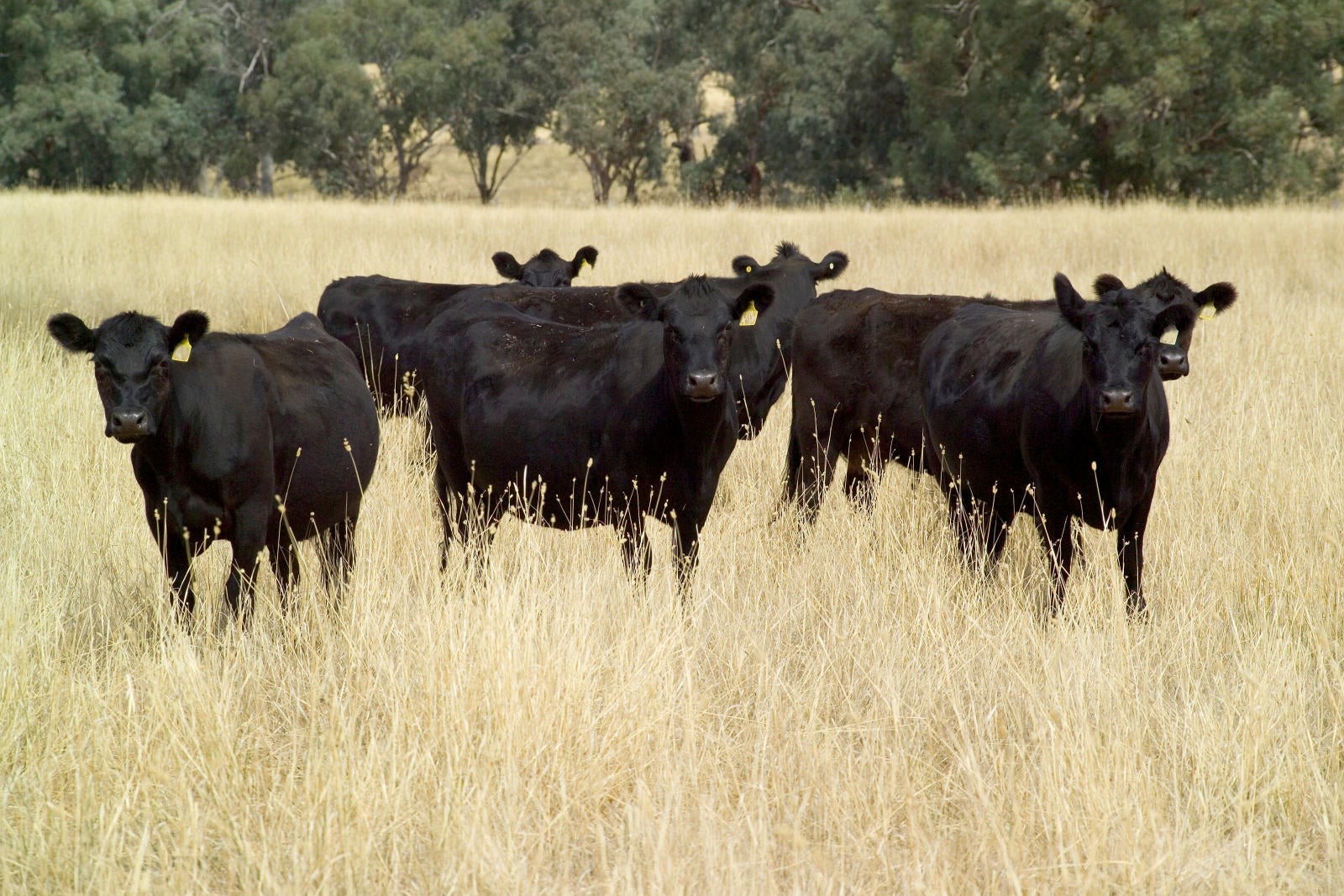
After weaning, cattle are sent to farms and/or ranches as backgrounders or stockers. This phase of the lifecycle consists of continued grazing, supplemental feed and vitamins and minerals to ensure nutritional needs are met for optimal growth.
Finishing Stage
When cattle are set up to be finished, they may be sent to a feedyard or they may stay on the farm. Cattle will spend effectually four to half-dozen months feeding from a well-counterbalanced diet fabricated up of roughage, grain and other renewable feed sources. Some cattle are finished on grain and some on grass. To larn more nearly grain finished and grass finished beefiness, click here. Cattlemen piece of work closely with veterinarians to provide proper and individualistic care.
Cattle are market prepare when they meet market weight (usually 1,200 to 1,300 pounds). Marketplace weight is met approximately fourteen-xv months of age. Once weight is met, they are sent to the packing plant. Packing plants are also chosen processing facilities and are fully monitored by the United States Section of Agriculture (USDA). The USDA has inspectors stationed in all federally-inspected packing plants. The inspectors oversee all aspects of the process to include condom, animal welfare and quality standards. The unabridged process from animate being inflow to production shipment is monitored.
Beef products are shipped across the U.s. and abroad to run into the needs of grocery suppliers, retail establishments and restaurants. The foodservice and retail phase works to provide this wholesome and nutritious product to consumers.
Beef Cattle Industry Terminology
Following are definitions of some common terms used in the cattle industry.
Bogus Insemination (A.I.) - The procedure for impregnating cows by manually placing semen in the reproductive tract of the female person.
Average Daily Gain (ADG) - Calculation of mail service-weaning gain, figured past dividing the weight gain by the days on feed.
Backgrounder – Cattle that take been weaned and are growing and maturing until they meet the requirements for feedlot finishing.
Bred - Applies to the female definitely safe in calf, or pregnant; too used to refer to the mating process.
Balderdash - Uncastrated male cattle of any historic period.
Calf or calves - Young cattle of either sex less than one yr of age.
Calving - Giving nascence, also called "dropping a dogie" or parturition.
Castrate - to remove the testes of male person cattle.
Crossbred - An animal that has purebred parents or class parents of different breeds.
Cow - Female person cattle that have had one or more calves.
Feeder calf – A steer or heifer that is mature enough for backgrounding or to enter the finishing stage.
Finish - The degree of fatness
Finishing – The stage where cattle are fed and prepared for harvest.
Freemartin - The female member of unlike twins in cattle, showing many male characteristics and incapable of production.
Heat - The recurrent period of sexual receptiveness in mature cows, when the moo-cow will stand for the balderdash to breed her; estrus.
Heifer - Female cattle that accept not had a calf.
Open - Refers to the non-pregnant female.
Polled - Cattle that are born without horns.
Purebred - A beef animate being whose parents are of the same breed and are recorded with the registry clan.
Service - The act or power to breed.
Steer - Male cattle that were castrated at an early age before any sex characteristics developed.
Stocker – Weaned cattle between six to ix months old and weighing between 400 and 700 pounds.
Supplement - Nutritional condiment intended to remedy deficiencies of the nutrition, such equally table salt, minerals, poly peptide.
Weanling – Cattle that have merely weaned from their female parent'due south milk.
Sources: Academy of Arkansas Extension, Beefitswhatsfordinner.com, beef2live.com, wvbeef.com
Source: https://www.farmcreditofvirginias.com/knowledge-center/blog/beef-cattle-production-and-lifecycle
0 Response to "How Much Time Does It Take for Beef Cattle to Reach Market Weight"
Post a Comment